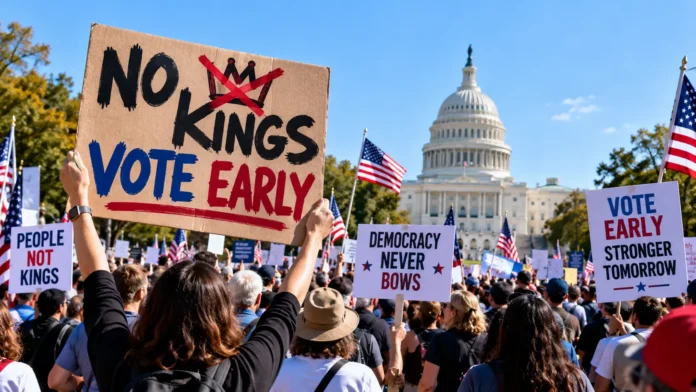
No Kings rallies 2026 Across US Push Early Voting Ahead of Midterms
WASHINGTON, D.C., October 18, 2026 — No Kings rallies took place across the United States on Saturday, October 17, as demonstrators and grassroots organizations encouraged Americans to participate in early voting ahead of the November 3 midterm elections.
The nationwide demonstrations, organized under the banner “No Kings: Vote Early,” marked a shift in strategy for a movement known for its opposition to President Donald Trump. This time, organizers placed greater emphasis on voter participation, election awareness and protecting voting rights.
Demonstrators Gather in Washington, D.C.
In Washington, D.C., participants gathered near the Lincoln Memorial, carrying signs encouraging Americans to vote early and protect their electoral rights.
The Washington-area event also included a march from Arlington, Virginia, across Memorial Bridge toward the Lincoln Memorial.
Similar demonstrations and voter engagement activities took place in New York, Atlanta, San Francisco and communities across the country.
No Kings Movement Focuses on Early Voting
The No Kings coalition coordinated thousands of planned activities, including rallies, neighborhood gatherings and voter education events.
Organizers described the initiative as nonpartisan, despite the movement’s history of protesting policies and actions of the Trump administration.
Volunteers encouraged Americans to verify their voter registration, understand local voting requirements and prepare to cast their ballots.
The latest campaign represented a transition from large-scale political demonstrations toward practical voter mobilization.
Why the 2026 Midterm Elections Matter
The United States will hold its midterm elections on November 3, 2026. Voters will determine the composition of the House of Representatives and elect senators in contested races.
All 435 voting seats in the House and approximately one-third of Senate seats are contested in regularly scheduled congressional elections.
The results will determine control of Congress and influence the direction of federal legislation and government oversight during the remainder of President Trump’s term.
Voting Rights and Political Debate
The demonstrations also reflected continuing disagreements over election administration, mail-in voting and voting access.
Organizers expressed concerns about measures they believe could restrict voter participation or weaken electoral safeguards.
President Trump has rejected comparisons between his leadership and monarchy, while his administration has argued for stronger election-security measures.
These competing positions form part of the broader political debate surrounding the upcoming elections.
What Voters Should Know
Early voting rules, polling locations and registration deadlines vary by state.
Eligible voters can consult their state or local election offices for accurate information about voting options and deadlines.
As the November elections approach, the No Kings campaign is emphasizing participation at the ballot box alongside its broader political activism.